
The word “differentiation” has been popular amongst educators for several years, and even though we as music teachers feel we differentiate daily, it can be a struggle to effectively do so in a small-group setting. Depending on our schedule (or more accurately, our building’s schedule) we may see any combination of students in small-group lessons. Some teachers have no say in their lesson schedule, while others have full autonomy. In some cases, teachers may not be able to place a “cap” on lesson group size, while other teachers may be allowed to decide exactly how many students are in each group. Some teachers have no choice but to see students in groups of different instruments and different levels of playing. Like some teachers, I am fortunate to create my schedule myself, so I group my students by experience and instrument – for example, I currently have 2 flute groups: 1st-year flutes (4th grade beginners) and 2nd-year flutes (5th graders). Even though I have this choice and can group students how I see fit, there will always be differences in ability, and no two students will require exactly the same instruction. Regardless of the combination of students we find ourselves teaching during a small-group lesson, here are five strategies to achieve differentiation in those lessons and succeed in educating each of our students at their level of need.
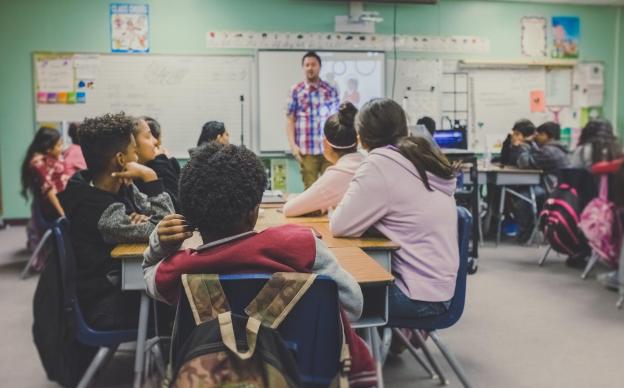
1. Individualized Attention
Whether your lesson group has two students or ten, it is incredibly helpful to regularly give students individualized attention – not only so that you know exactly how each student is progressing, but also to make sure that student is comfortable with the material and knows all the notes and rhythms. If I spend too much time asking students to play as a group, some students will find a false sense of security in the strength of their peers. Students will feel as though they know and can play everything, since “it sounds good” when the group plays together. It is our job to make sure each student can do what we are asking of them on their own as well as with the group. To make this happen, I will assign the group a quiet task – a review worksheet for students to work on individually, or working on a specific song with just fingers and air. This way, I can move from one student to the next and check in with them, answer any questions, and briefly hear them play. It’s very important for me to get to know each student as an individual player, to understand their strengths and weaknesses, and to make them feel as though they are an integral part of the band program (which they are!). A quiet, relevant activity will afford me a few meaningful and productive minutes with each student in the group.

2. Levels of Performance
When we do play as a group, I often see disparity between my strongest players and my weakest players. In order to allow each student in the group to perform at their current musical level (and comfort level!), I give options so that each student may participate in their own way. Some students can play the song as written. Some students need to focus more on fingers, so they perform without blowing air through their instrument. Other students may have difficulty remembering the notes, so they sing the pitches using the note names to reinforce that particular skill. Many variations of these methods of participation exist, and I think it is very important to recognize that our students will learn at different speeds and that, instead of pushing each student to be able to perform the song the same way at the same time, we can allow students to contribute what they are able, and work up to performing the song as written in their own time.

3. Partner Up
When there is a clear divide between strong players and weak players in a lesson group, I will have students “partner up” and work together on the material, asking the students to help each other. Giving students time to work with each other allows me to observe three things: 1) the extent to which students are understanding the material, 2) whether or not I am teaching in the best way for my students to understand, and 3) if/how students are making mistakes. I really enjoy watching my students work together, because I get to see which students understand the material thoroughly enough to teach it to others. I get to see if the way I teach makes the most sense to students, or whether they are thinking about the music in other ways. If students do make mistakes, I get to see when, how, and why, and then help them to correct it. Even just five minutes of partner work will allow you to observe and teach your students in brand new ways.
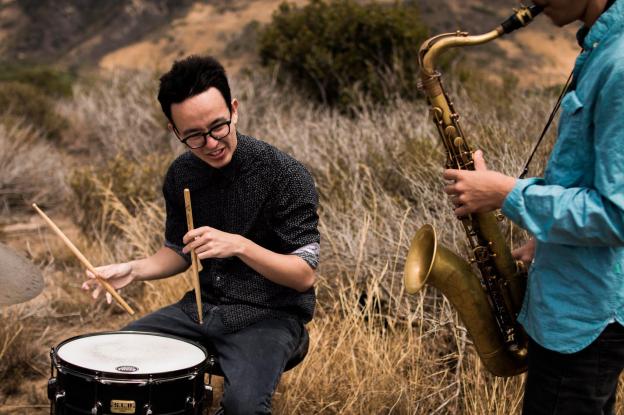
4. Supervised Practice
When students arrive in my classroom for their lesson, they have a minute or two for warming up their instrument and getting ready to play for the next half hour. Some students will play a scale or two, brass players will buzz and do some lip exercises, and most students will play a bit of whatever music they are studying. Usually, I will begin full-group instruction once all students are ready to play. Sometimes, however, I will allow the students a few extra minutes of individual practice time. Doing so gives me insight into how students practice at home, and it can be very enlightening. When I observe students practicing individually, I can tell which students have a routine of practicing regularly at home. I can see which students know themselves and their playing well enough to be productive and improve their playing. I watch students use their book as a resource when they come across something they don’t recognize or don’t remember. I also can identify which students aren’t sure how to practice, and I can approach those students with suggestions and strategies to incorporate into a practice routine. I try my best to explain different practicing techniques, but sometimes it is best to watch students in action and then show them how to improve upon what they already do.
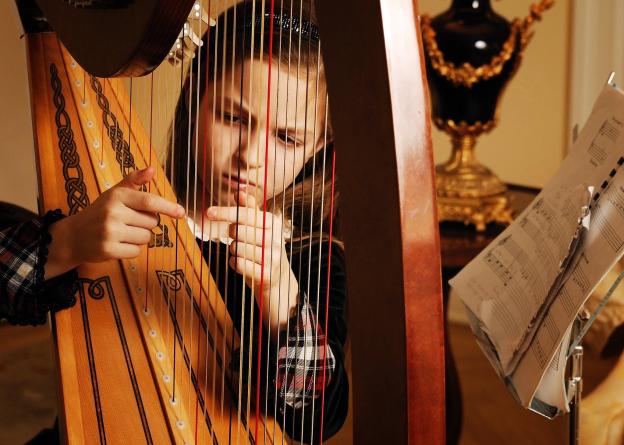
5. Take Turns in the Spotlight
This year more than ever, students have asked me to play by themselves in front of the rest of their group. I don’t do this often, but I find it helpful to ask students to take turns “in the spotlight” to get them used to playing completely on their own. As mentioned earlier, if students only ever play as a group, they will start getting used to that sound and not become familiar enough with the sound of their instrument by itself. I want my students to understand their individuality as a performer and to build confidence in the sound they produce, cultivating that unique sound from the beginning of their instrumental education. Even if it is sometimes only a single note, I think it is extremely important for students to have that opportunity to play by themselves. Not only does this give the student confirmation that they are playing correctly, but hearing them play alone also alerts me to any issues they might have, whether it be an instrument problem, a concept misunderstanding, or a lack of communication that I may not have noticed when they play with the entire group.

Utilizing these strategies for differentiating your small-group instrumental instruction will allow you to directly address the needs of each student you teach. If done correctly, it will also create an environment of trust, respect, and safety that facilitates high-level music education in your classroom. With so much focus on concerts, festivals, field trips, and other school events, it is easy to continually push students towards perfecting their music for performance. However, it is important to discover exactly what knowledge each student has and how you can expand upon that knowledge to help the student succeed in improving their playing. We should not allow our small-group parameters to act as a barrier, but rather as a vehicle that allows us to try new strategies to reach our students and give them different tools depending on their method of learning.
Until next time,

 Meg Elder, Beginning Band Teacher & Oboist